 World War II’s Forgotten battles
 The Battle of Britain
 Hidden Heroes of War Elite soldiers
 Air War over Germany
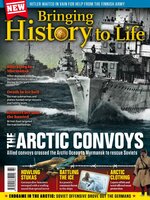 The Artic Convoys
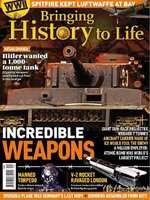 Incredible Weapons
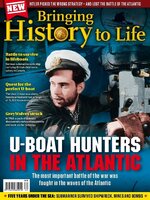 U-Boat Hunters in the Atlantic
 WW2's Darkest Crimes
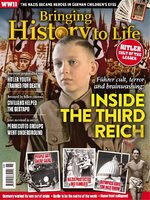 Inside the Third Reich
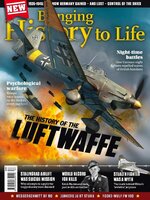 Luftwaffe
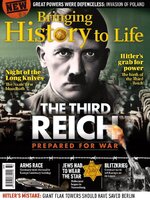 The Third Reich - prepared for war
 Nazi Mysteries
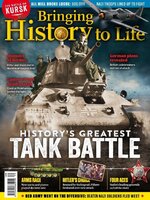 Historys Greatest tank Battle
 Panzer!
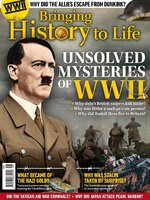 Unsolved Mysteries of WWII
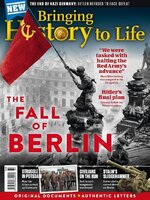 Fall of Berlin
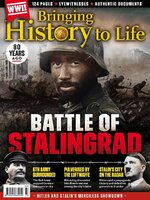 Battle of Stalingrad
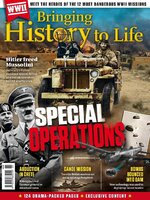 Special Forces - Equipment! Tactics! Missions!
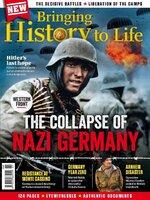 The Collapse of Nazi Germany / Western Front
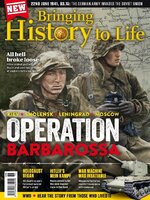 Operation Barbarossa
 Nazi Stormtroopers
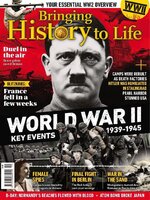 World War II - Key events 1939-1945
In 1933, Adolf Hitler seizes power in Germany, where he has seduced the population with golden promises of a restoration of the Great German Empire. He allies himself with Mussolini's fascist Italy, Stalin's communist Soviet Union and the military dictatorship in Japan, which has the same dreams of grandeur as Germany. In this series, you get a thorough review of World War II - from the birth of fascism through the war's many dramas to the aftermath, where the victors deal with the war's worst criminals.
WELCOME
THE FALL OF FRANCE • In 1940, France had the world’s strongest army and a bulwark of bunkers protecting its border with Germany. It was unthinkable that its defences would collapse in weeks – but France hadn’t reckoned on two German generals, Guderian and Rommel, who had studied Napoleon and developed a new tactic: blitzkrieg.
THE PLAN TO OCCUPY BRITAIN • After the Nazis’ victorious blitzkrieg against France, Hitler ordered his navy and army to prepare for an amphibious assault on the British Isles. Under Operation Sealion, 260,000 German troops were to storm the country from the south, seize power within a month and impose a brutal military dictatorship.
RAF gambled on bombing the enemy • After World War I, the Royal Air Force laid out a new strategy, the core of which would be long-range bombers. Rebels in the British Empire and war enemies would be subjected to massive bombing raids. In return, fighters would take a lesser role – until Hitler was on the doorstep.
BATTLE OF BRITAIN • To clear the way for an invasion of Great Britain, Hermann Göring ordered the bombing of Royal Air Force bases and the destruction of every British fighter plane in the summer of 1940. Up to five times a day, British pilots had to engage in fierce aerial combat that nearly brought the RAF to its knees.
“The attack came on a beautiful Sunday” • Rae Helen Bark saw the flash over London and watched as German pilots navigated along the Thames, trying to reach the centre of the capital. Failing in their mission, the pilots instead dropped their bombs on their return journey, hitting the town of Erith, where Rae Bark lived.
RADAR WON THE WAR • In the 1930s, a British engineer discovered that flying aircraft interfered with radio signals. That knowledge was to prove decisive when he was approached by the British Air Ministry and asked to develop a defence against enemy planes. A few years later, radar masts were set up on cliffs from Dover to Wales.
BRITAIN STRIKES BACK • Herman Göring promised at the outbreak of war that not a single bomb would hit Berlin. But the Luftwaffe commander was forced to eat his words as Allied bombers roared over the German capital in the summer of 1940, dropping their deadly payloads. Against all odds, the Third Reich found itself under attack.
“I put the plane into a panic power dive” • Colin Bell considered himself an experienced pilot when he took off on his first mission to Hanover, but an encounter with an anti-aircraft gun over Germany still made him panic. And with good reason. Only a quarter of Allied bomber pilots survived more than a couple of years.
BLITZ OVER LONDON • On 7th September 1940, an ominous howl sounded over London. German bombers were close to the capital and soon tonnes of bombs would fall on houses, docks, streets and alleys. The Luftwaffe had launched its Blitz, where German pilots would spend the next 57 days targeting and killing as many civilians as possible.
PICTURE INDEX
READING LIST
Bringing History to Life